

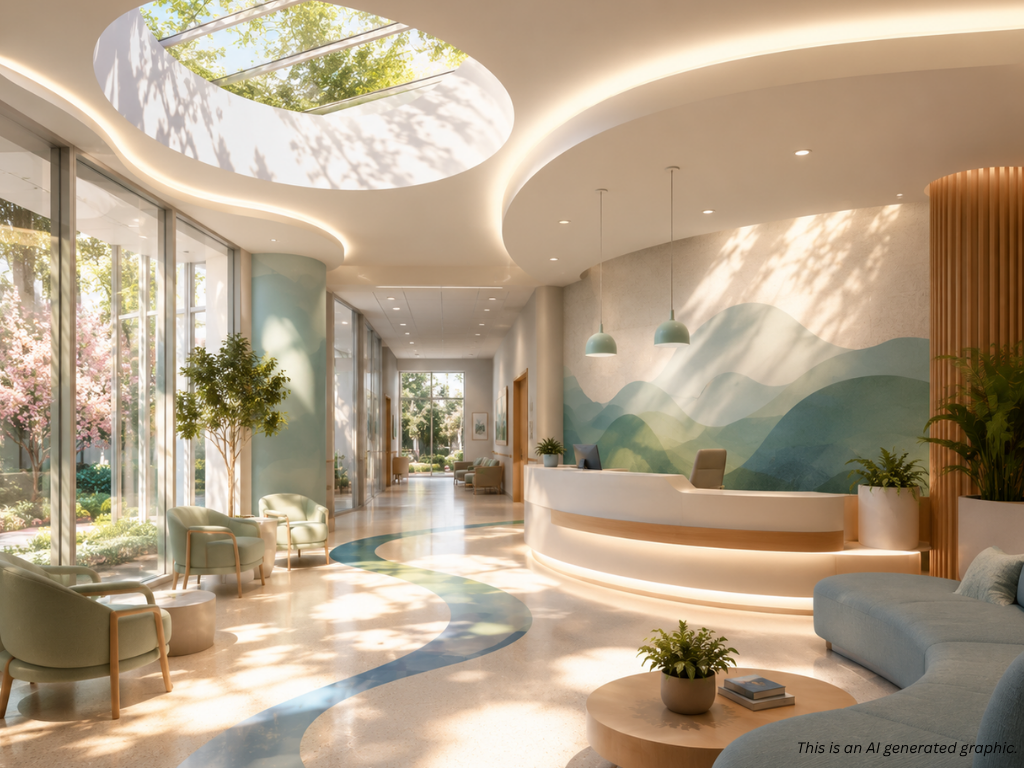
In our previous article, we explored how thoughtfully designed lighting can transform healthcare environments into spaces that promote comfort, reduce stress, and support healing. But creating those experiences isn’t simply about adding more windows or installing brighter fixtures.
Behind every calming patient room, welcoming lobby, and naturally illuminated corridor is a series of intentional design decisions that begin long before construction starts. At Brandt Design Group, we see light as one of the most important elements of healthcare design—one that influences how people move through a space, how they feel within it, and ultimately, how they experience care.
It Starts Before the Building Exists
Exceptional lighting design begins long before the first wall is built.
From the earliest planning stages, architects and designers consider how a building will interact with the sun throughout the day. Factors such as building orientation, patient room placement, and the location of public spaces determine how natural light enters and moves through the facility.
A patient room that welcomes gentle morning sunlight creates a very different atmosphere than one exposed to intense afternoon heat. These early design decisions help maximize daylight while minimizing glare, unwanted heat gain, and energy consumption.
By planning for sunlight from the very beginning, healthcare environments remain comfortable, efficient, and inviting throughout every season.
Every Space Has Different Lighting Needs
Lighting should never follow a one-size-fits-all approach.
Every area within a healthcare facility serves a different purpose, and each requires its own carefully considered lighting strategy.
Reception areas should feel bright, welcoming, and easy to navigate. Patient rooms should encourage rest while maintaining a sense of warmth and connection. Examination rooms demand precise, adjustable lighting that supports clinical accuracy, while family lounges benefit from softer, residential-inspired illumination that creates a calming place for loved ones to gather.
Rather than asking people to adapt to the building, thoughtful healthcare design adapts the lighting to support the people using each space.
Designing for Every Hour of the Day
Healthcare doesn’t stop when the sun goes down.
Hospitals and medical facilities operate around the clock, making lighting design a continuous consideration rather than a daytime solution.
Successful healthcare environments carefully layer natural and artificial lighting to maintain visual comfort throughout changing conditions. During daylight hours, natural light takes the lead whenever possible. As evening approaches, artificial lighting gradually supports the environment, avoiding harsh transitions or excessive brightness.
This balanced approach creates a more comfortable experience for patients while helping healthcare professionals remain focused and supported during long shifts.
Lighting That Evolves with Healthcare
Healthcare facilities are designed to serve communities for decades, which means their lighting systems must be prepared to evolve alongside changing technologies and clinical practices.
Today’s lighting solutions offer far more than illumination. They improve energy efficiency, simplify maintenance, and integrate seamlessly with modern building technologies—all while keeping patient comfort at the center of the design.
Planning for flexibility ensures these systems continue to perform effectively long after a facility opens its doors, allowing spaces to adapt without sacrificing functionality or experience.
Designing with Intention
Most patients will never notice why a room feels comfortable.
They won’t think about the precise placement of a window or the careful selection of a lighting fixture. What they’ll remember is how the environment made them feel.
When lighting is thoughtfully integrated into the architecture from the very beginning, healthcare spaces naturally become brighter, calmer, and more welcoming without drawing attention to the design itself.
At Brandt Design Group, we believe exceptional healthcare design is built through intentional decisions that support every patient, visitor, and healthcare professional who enters the space. Light is more than an architectural feature—it’s a strategic design element that helps create environments that promote healing, improve experiences, and remain effective for years to come.
Because the best healthcare spaces don’t simply contain light—they’re thoughtfully designed to work with it.