

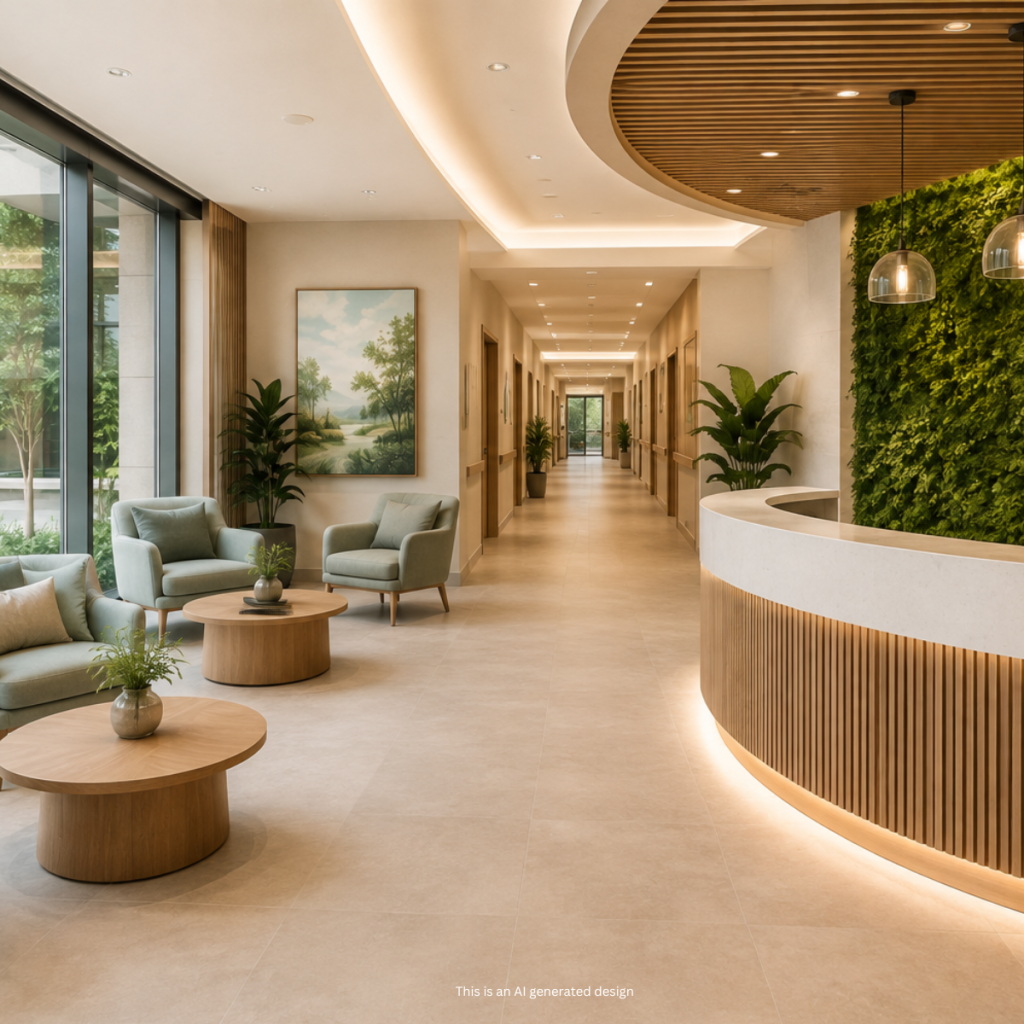
Before a patient meets a physician, speaks with a nurse, or receives a diagnosis, they’ve already begun forming an impression of the care they’ll receive.
That impression starts the moment they arrive.
The entrance, the reception area, the signage, the lighting, the materials, and even the way a space flows all send subtle messages. Is this place organized? Is it welcoming? Does it feel safe? These early experiences shape a patient’s level of comfort and confidence long before any clinical interaction takes place.
At Brandt Design Group, we believe healthcare design isn’t just about creating beautiful spaces. It’s about building trust from the very first step inside.
First Impressions Influence Patient Confidence
For many people, visiting a healthcare facility comes with uncertainty. Whether they’re arriving for a routine appointment or facing a life-changing diagnosis, emotions often run high.
A thoughtfully designed environment can help ease that emotional burden.
Clear wayfinding reduces confusion. Comfortable waiting areas provide a sense of calm. Warm materials and welcoming finishes replace the cold, institutional feel many people associate with healthcare. Together, these elements create an environment that communicates professionalism, compassion, and care.
When patients feel at ease, they’re more likely to feel confident in the care they’re about to receive.
Design Communicates Without Words
Every design decision tells a story.
A cluttered lobby may suggest disorganization. Poor signage can create frustration before an appointment even begins. Dim, cramped spaces may increase anxiety, while open, intuitive layouts encourage confidence and ease.
Conversely, clean lines, intuitive circulation, natural materials, and thoughtfully planned spaces silently communicate that every detail has been considered—including the patient’s experience.
Good design becomes an extension of quality care.
Trust Extends Beyond Patients
Healthcare environments serve more than patients. Families, visitors, physicians, nurses, and support staff all interact with the same spaces.
When facilities are designed with everyone in mind, they foster smoother workflows, improve communication, and create more positive experiences across the board.
Families feel more comfortable waiting.
Staff navigate their work more efficiently.
Patients sense the coordination and professionalism around them.
Trust grows because the environment supports the people within it.
Designing for Confidence
Building trust isn’t achieved through architecture alone. It’s the result of countless intentional decisions that prioritize people.
From intuitive layouts and welcoming public spaces to carefully selected finishes and human-centered planning, great healthcare design helps patients feel respected, supported, and cared for before treatment even begins.
Because in healthcare, trust doesn’t start in the exam room.
It starts the moment someone walks through the door.