

Healthcare design has evolved beyond creating functional spaces. Today, the focus is on crafting environments that positively influence how people feel, heal, and connect. One of the most powerful yet often understated design elements is light.
More than simply illuminating a room, light has the ability to transform an ordinary healthcare space into an uplifting experience. Through thoughtful design, it can reduce stress, create moments of wonder, and foster a sense of comfort for patients, families, and caregivers alike.
At Brandt Design Group, we believe light should do more than brighten a space—it should enhance the human experience.
When Light Becomes Part of the Journey
Natural light has long been recognized for its positive effects on health and well-being. But today’s healthcare environments are taking that concept a step further by using light as an active design feature rather than a passive necessity.
As sunlight moves throughout the day, it changes in color, intensity, and direction. Thoughtfully designed architectural elements can harness these shifts to create spaces that feel dynamic and alive. Instead of static interiors, patients encounter environments that evolve naturally with time, offering subtle visual interest and a stronger connection to the outside world.
These changing moments can provide welcome distractions during long appointments or hospital stays, helping reduce anxiety while making healthcare settings feel less institutional.
Creating Moments of Discovery
Design has the power to inspire curiosity, even in clinical environments.
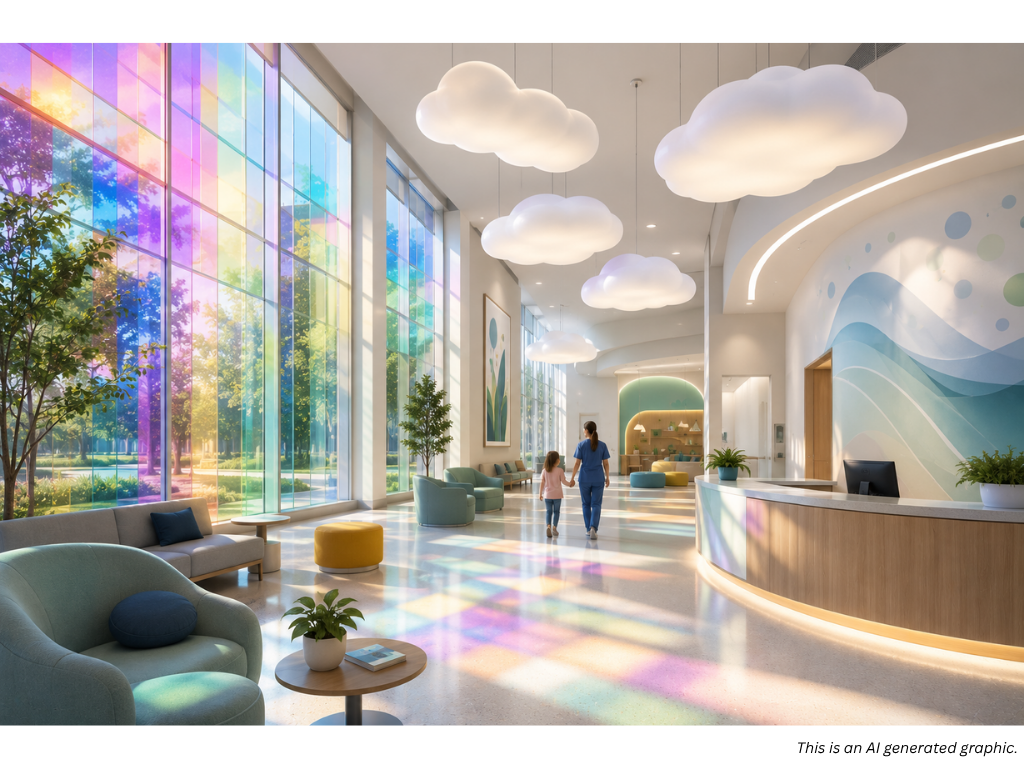
Architectural glass, reflective surfaces, and carefully placed skylights can transform ordinary sunlight into colorful displays that shift across floors and walls throughout the day. These ever-changing patterns create small moments of discovery that patients may look forward to, particularly children experiencing unfamiliar healthcare settings.
Rather than overwhelming the space, these elements quietly introduce beauty into everyday experiences, reminding visitors that healthcare environments can feel welcoming as well as highly functional.
Designing for Young Minds
Children often experience healthcare differently than adults. New environments can feel intimidating, making thoughtful design especially important in pediatric settings.
Playful lighting features inspired by clouds, stars, or nature help soften large interior spaces while creating a sense of familiarity. Suspended lighting installations can lower the perceived scale of tall ceilings, making waiting rooms and treatment areas feel more approachable.
These imaginative design choices encourage exploration instead of fear. They create positive visual landmarks that children remember, helping transform stressful visits into experiences that feel more comforting and engaging.
Importantly, these elements also benefit parents and caregivers by creating calmer, more welcoming environments where families can feel supported together.
Balancing Beauty with Performance
Healthcare facilities must meet rigorous technical standards, but that doesn’t mean they have to sacrifice warmth or creativity.
Successful lighting design carefully balances aesthetics with clinical performance. Designers consider brightness levels, energy efficiency, glare reduction, maintenance requirements, infection control, and visual comfort while creating spaces that remain beautiful and functional.
Every lighting decision should support both the operational needs of healthcare professionals and the emotional needs of the people receiving care.
Designing Experiences That Last
Patients may not remember every conversation they have during a medical visit, but they often remember how a place made them feel.
A thoughtfully designed healthcare environment uses light to communicate optimism, comfort, and hope without saying a word. Whether through changing daylight, artistic architectural features, or imaginative ceiling installations, these experiences contribute to spaces that feel distinctly human.
At Brandt Design Group, we believe exceptional healthcare design isn’t measured solely by efficiency or aesthetics. It’s measured by the experiences it creates for every patient, every family member, and every caregiver who enters the space.
Because when light is thoughtfully designed, it becomes more than illumination—it becomes part of the healing experience.