

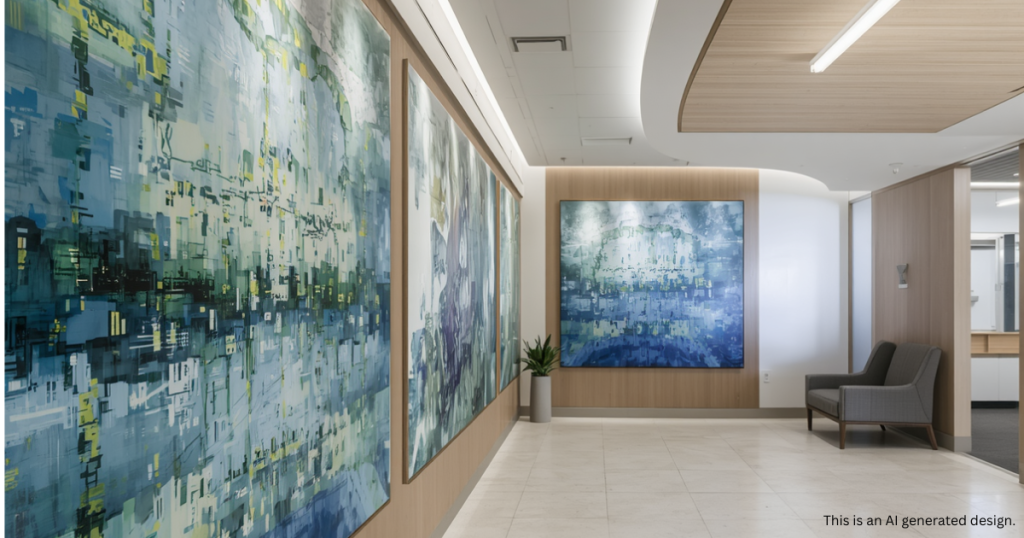
At Brandt Design Group, we believe healthcare design is not only about shaping efficient clinical environments—it is about shaping human experience. While medical technology, operational flow, and patient safety remain essential, there is another equally important layer that defines the quality of care environments: art.
Across today’s evolving healthcare landscape, organizations are recognizing that healing extends far beyond treatment alone. The spaces where care is delivered directly influence emotions, stress levels, and overall well-being. For this reason, art is being intentionally woven into healthcare environments—not as decoration, but as a fundamental part of the healing journey.
More Than Aesthetic Appeal
Healthcare facilities can be emotionally complex spaces. Patients arrive carrying uncertainty. Families navigate moments of anxiety. Staff operate within high-pressure, fast-paced environments every day.
Thoughtfully integrated artwork helps soften these experiences.
From impactful entryway installations to curated murals, sculptural elements, and nature-inspired compositions throughout corridors and waiting areas, art introduces moments of pause. These interventions transform clinical environments into spaces that feel more human, more grounded, and more welcoming.
At Brandt Design Group, we see art as an essential design tool—one that supports emotional balance while enhancing the overall environment.
Creating Opportunities for Reflection
One of the most meaningful contributions of art in healthcare settings is its ability to create space for reflection.
The moment someone enters a healthcare facility, they are often carrying emotional weight—concern for a loved one, anticipation of results, or the strain of caregiving responsibilities. In these moments, the environment matters.
A thoughtfully placed artwork can encourage stillness. It can invite someone to pause, breathe, and reconnect with the present moment. It can offer comfort without words and clarity without instruction.
These quiet, intentional moments of reflection can significantly influence how individuals experience care environments.
Supporting Patients, Families, and Healthcare Teams
The impact of art extends across every user of a healthcare space.
For patients, it can ease anxiety and create a sense of comfort and familiarity. Nature-inspired visuals, calming palettes, and culturally meaningful artwork help ground individuals during vulnerable moments.
For families and visitors, art transforms waiting areas into more supportive environments—spaces that feel less clinical and more compassionate.
For healthcare professionals, art contributes to workplace well-being by reducing visual fatigue, enhancing emotional balance, and supporting restorative moments throughout demanding shifts.
Reflecting Community and Culture
Art in healthcare is also a powerful form of storytelling.
Many healthcare campuses collaborate with local artists and communities to develop installations that reflect the identity, culture, and history of the people they serve. These creative expressions help strengthen the connection between healthcare facilities and their surrounding communities.
When individuals see their culture and lived experiences represented in the built environment, it fosters belonging, dignity, and trust—core elements of meaningful care.
Designing for Human-Centered Healing
Modern healthcare design continues to evolve toward a more holistic understanding of healing—one that recognizes emotional, psychological, and social well-being alongside physical care.
Within this framework, art plays a critical role. It brings humanity into spaces that might otherwise feel clinical or overwhelming. It encourages connection, supports reflection, and helps create environments where people feel seen, supported, and respected.
At Brandt Design Group, we remain committed to designing healthcare environments that elevate both function and feeling—spaces where every detail contributes to a more compassionate experience of care.
Because healing is not defined by treatment alone—it is shaped by the environment, the people within it, and the quiet moments that help us feel whole again.